Parasitic Wasps Rewrite Host Gut Microbiomes
TL;DR: A carnivorous pitcher plant in Borneo evolved to house bats instead of trapping insects, gaining up to 95% of its nitrogen from bat guano. The plant even built an ultrasonic reflector to help bats find it, revealing that carnivory in plants is a flexible spectrum.
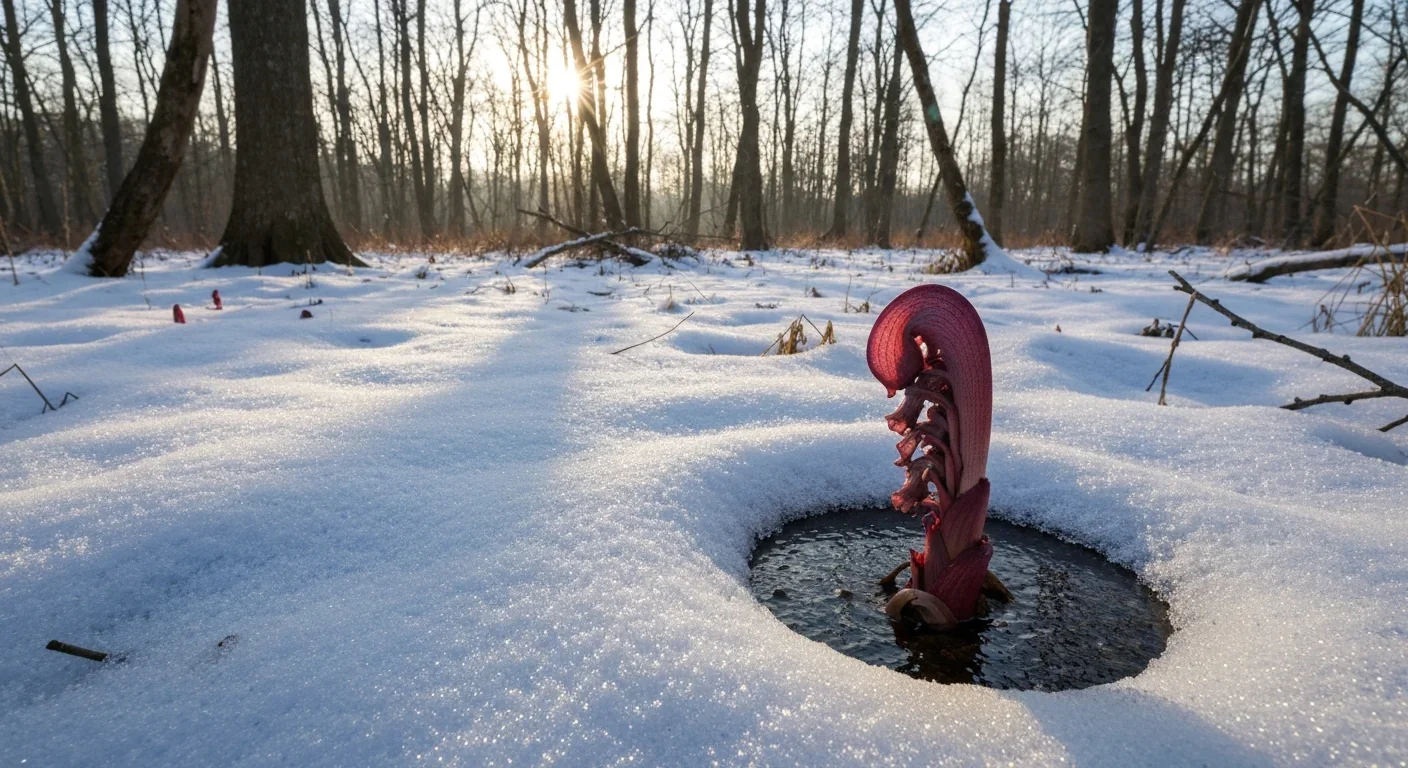
What happens when a predator decides cooperation pays better than killing? Deep in Borneo's peat swamp forests, a carnivorous pitcher plant called Nepenthes hemsleyana has done something that sounds like the setup for a nature documentary punchline. It stopped catching insects and started renting out apartments to bats instead. The rent? Poop. Nitrogen-rich, pre-digested, ecologically precious poop.
This isn't some minor curiosity. It's one of the most striking examples of evolutionary ingenuity that researchers have documented in recent decades, and it's forcing biologists to rethink what "carnivorous" even means when it comes to plants.
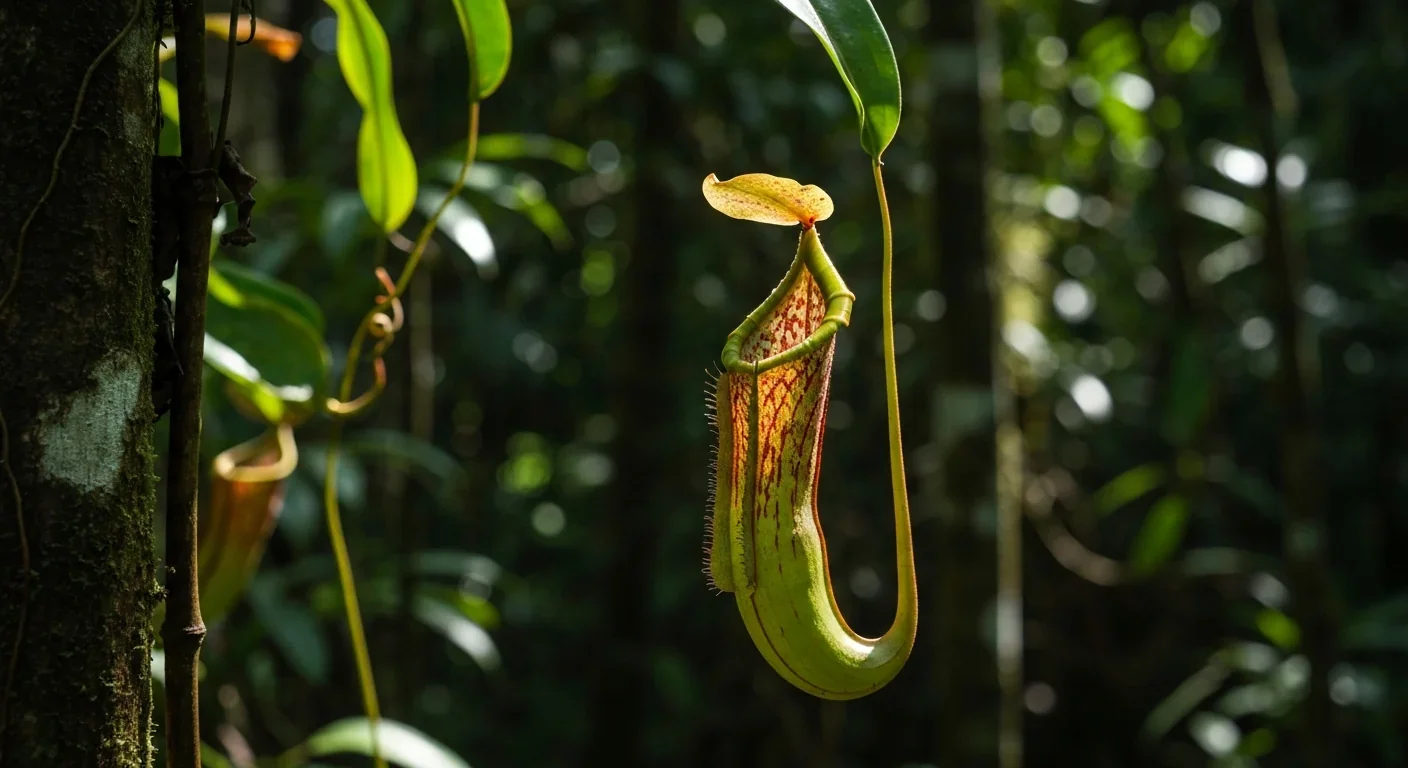
Pitcher plants are famous for one thing: trapping and dissolving insects. Their tube-shaped leaves fill with digestive fluid, lure bugs with nectar, and send them sliding down slippery walls into an acidic bath. It's brutal, effective, and it's been working for millions of years.
But Nepenthes hemsleyana, formerly classified as N. rafflesiana var. elongata, took a different path. Its pitchers are unusually elongated and slender compared to its close relative N. rafflesiana. The digestive fluid inside is watery and sparse, leaving plenty of room above the liquid line. The waxy interior that normally sends insects sliding to their doom? Mostly absent. The UV patterns that attract bugs? Gone. Even the nectar production and odor attractants are reduced.
In short, this plant is terrible at catching insects. And that's entirely the point.
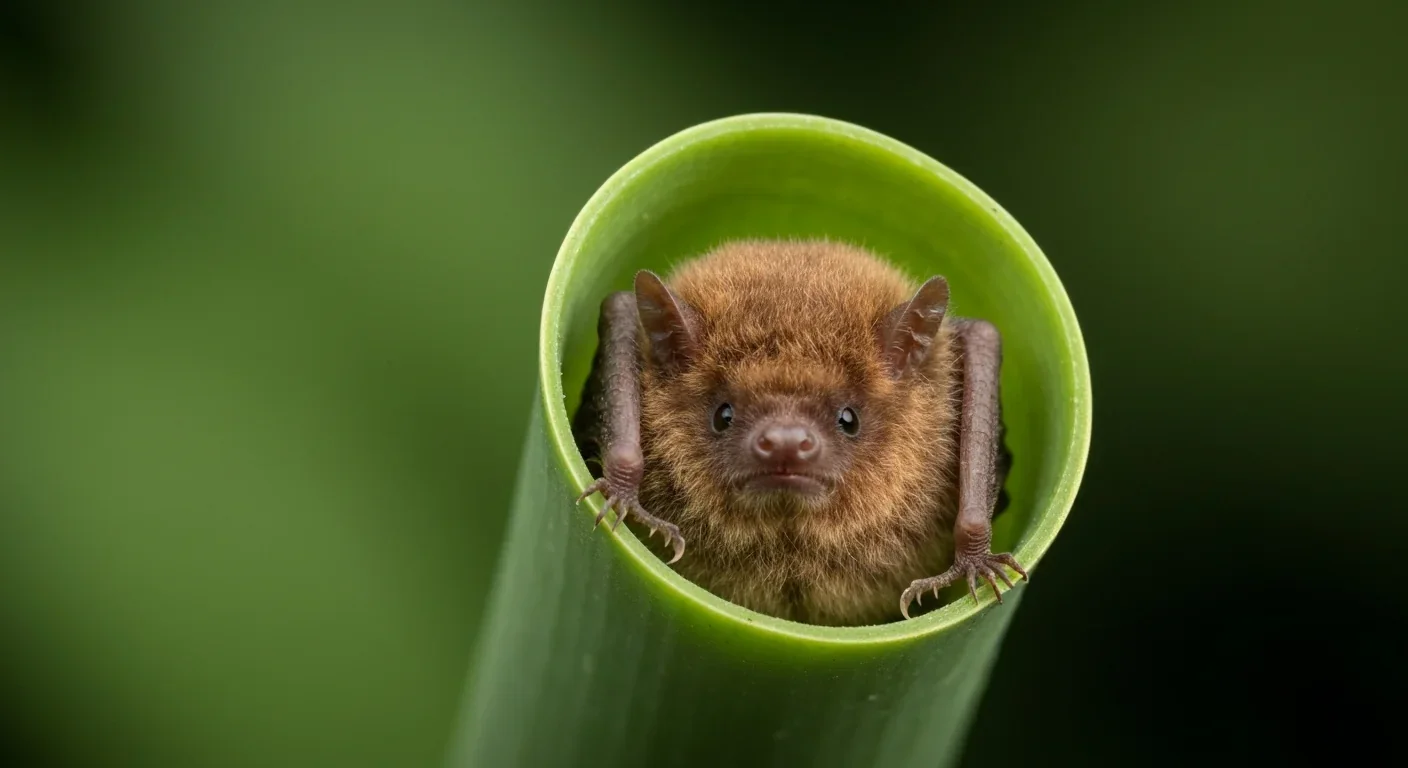
Instead of bugs, these modified pitchers attract Hardwicke's woolly bat (Kerivoula hardwickii), a tiny insectivorous bat that weighs about as much as a AA battery. The bats crawl inside the elongated pitchers during the day, roost safely above the minimal digestive fluid, and sleep until dusk. When they leave, they deposit something the plant desperately needs: nitrogen-rich guano.
To understand why a plant would abandon a proven hunting strategy, you need to understand where it lives. Borneo's peat swamp forests are among the most nutrient-starved ecosystems on the planet. The soil is waterlogged, acidic, and spectacularly poor in nitrogen, the element that plants need to build proteins, DNA, and the chlorophyll that powers photosynthesis.
Carnivorous plants evolved their insect-trapping abilities precisely because of this nitrogen scarcity. Dissolving a beetle gives a pitcher plant a nitrogen boost that the soil alone can't provide. But catching insects is expensive. You need to produce sticky fluids, maintain slippery surfaces, generate attractive scents, and keep your trap in working order. It's an arms race, and some Nepenthes species found a cheaper supplier.
In feeding experiments, N. hemsleyana plants gained between 34% and 95% of their nitrogen from bat guano. Plants without bat feces couldn't fully compensate by catching insects alone.
Research by Caroline and Michael Schoner, along with T. Ulmar Grafe and colleagues, has quantified just how valuable this bat partnership is. In feeding experiments, N. hemsleyana plants gained between 34% and 95% of their nitrogen from bat guano. Plants with access to bat feces showed significantly higher rates of growth, photosynthesis, and survival. Plants without bat guano couldn't fully compensate for the nutrient deficit by catching insects alone.
The math is stark: it's more efficient for the plant to outsource the bug-catching to a professional insectivore and collect the processed results than to do the hunting itself. Researchers at the University of Greifswald have called this "ecological outsourcing," and the term captures something genuinely clever about natural selection. Why build a trap when you can build a hotel?
Here's where the story gets really wild. Bats navigate by echolocation, sending out ultrasonic pulses and reading the echoes to build a mental map of their surroundings. In the dense tangle of a peat swamp forest, finding a single pitcher plant among thousands of similar-looking leaves would be like finding a specific mailbox on a street, at night, while flying.
Nepenthes hemsleyana solved this problem with engineering that would make an acoustics professor nod in appreciation. The back wall of its pitcher has evolved a concave, parabolic structure that acts as an ultrasonic reflector. When a bat sends out an echolocation call, this structure bounces the signal back with far stronger echo-reflection than comparable areas on related pitcher plant species like N. rafflesiana.
This discovery, published in Current Biology in 2015 by Schoner and colleagues, was a breakthrough moment. It showed that the plant had evolved a structure specifically to communicate with mammals using sound, reducing the time and energy bats spend searching for roosts. The plant essentially installed a sonar beacon on its front door.
"The shape and design of the pitcher has evolved to be an acoustic reflector to make it easier for bats to echo-locate."
- Nepenthes symbioses research, University of Greifswald
This kind of acoustic adaptation isn't unique to N. hemsleyana. A Cuban vine called Marcgravia evenia has concave bracts that reflect bat sonar to guide pollinators to its flowers. The convergent evolution of ultrasonic reflectors in two completely unrelated plant species, a carnivorous pitcher plant in Borneo and a tropical vine in the Caribbean, tells us something profound about how powerful bat echolocation is as an evolutionary pressure.
The bats aren't getting charity. Roosting inside N. hemsleyana pitchers offers measurable advantages over other options. Research from Schoner's doctoral work showed that bats roosting in these pitchers had lower ectoparasite loads and better overall body condition compared to bats roosting in dead pitchers of other species like N. bicalcarata.
The pitchers provide a favorable microclimate, protection from predators, and reduced parasite risk. The elongated shape can even accommodate mother-juvenile pairs, meaning a female bat can raise her young inside the plant. Most N. hemsleyana plants continuously provide at least one intact pitcher, so bats can return to the same plants over months or even years.
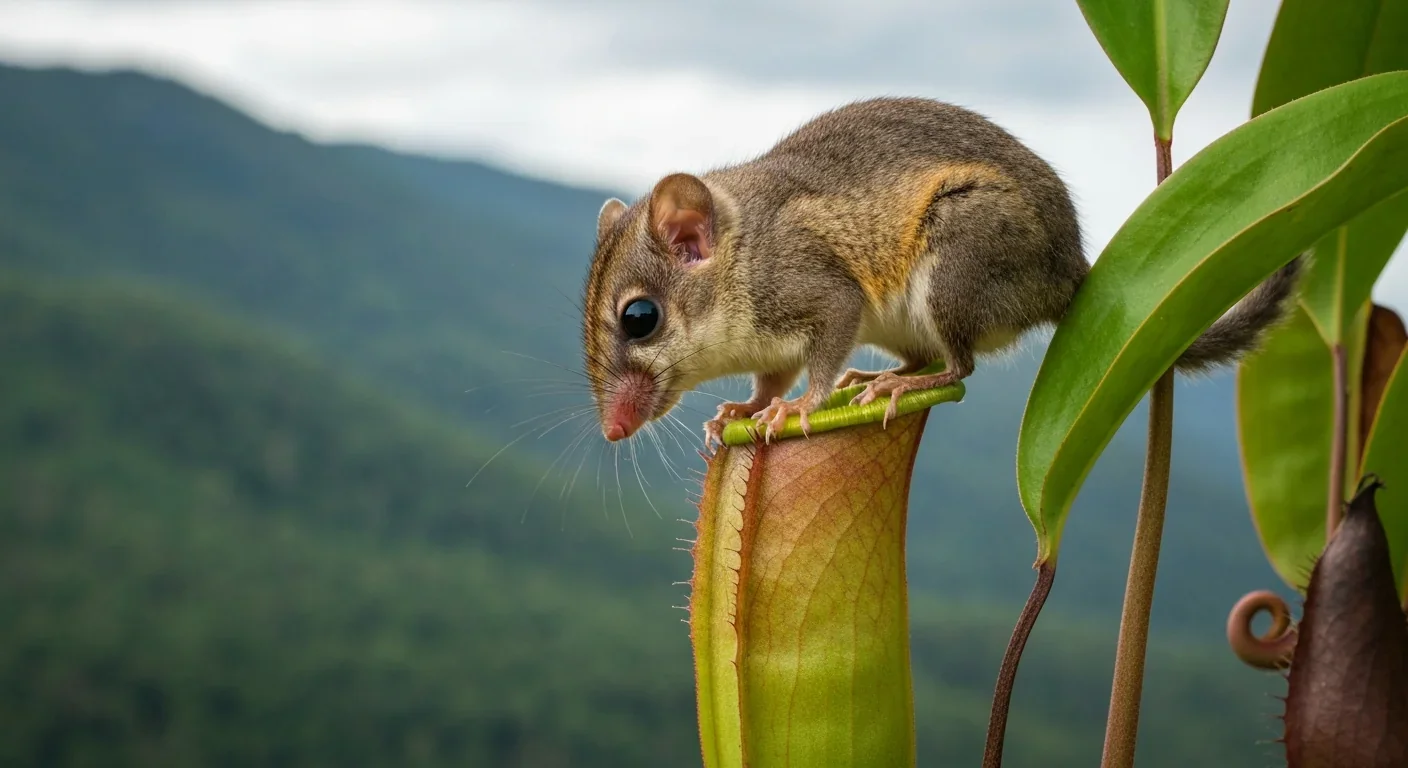
That said, the relationship isn't perfectly balanced. The research describes it as an "asymmetric facultative mutualism," meaning the plant depends on the bat more than the bat depends on the plant. The bat has alternatives. The plant, in its nutrient-desert home, has fewer options.
N. hemsleyana isn't the only Nepenthes species that discovered the value of animal feces. Borneo's mountains host an even stranger version of this story.
Nepenthes lowii, a highland pitcher plant with a distinctive wasp-waisted shape, has evolved a mutualistic relationship with mountain treeshrews (Tupaia montana). The plant produces sweet nectar on the underside of its reflexed lid. Treeshrews perch on the pitcher rim, lean forward to lick the nectar, and while they're in that position, their rear end is perfectly positioned over the pitcher opening. They defecate directly into the trap.
It's essentially a toilet. The plant produces food, the treeshrew eats it, and the payment drops straight into the collection vessel. A 2009 study found that mature N. lowii plants derived an astonishing 57 to 100% of their foliar nitrogen from treeshrew droppings.
Multiple Nepenthes species have independently evolved mammal partnerships. N. lowii gets up to 100% of its nitrogen from treeshrew droppings, while N. rajah runs the same play with both treeshrews and summit rats.
Nepenthes rajah, the largest pitcher plant in the world, runs the same play. Its massive pitchers with domed, nectar-producing lids attract treeshrews that mark their feeding territory by defecating into the pitcher. In 2011, researchers reported that N. rajah has a similar arrangement with the summit rat (Rattus baluensis).
These parallel partnerships suggest that switching from insect carnivory to mammal mutualism isn't a one-off fluke. It's a recurring evolutionary solution that multiple Nepenthes species have independently discovered when the nitrogen math favors cooperation over predation.
The spectrum of carnivorous plant partnerships extends beyond mammals. Nepenthes bicalcarata, another Bornean pitcher plant, hosts colonies of diving ants (Camponotus schmitzi) that live exclusively on the plant. These ants walk across slippery pitcher surfaces, swim and dive in the digestive fluid, and actively hunt mosquito larvae that would otherwise steal nutrients from the pitcher.
Plants with ant colonies grow larger and have higher nitrogen levels than those without. The ants boost the plant's capture efficiency, protect against nutrient theft, and deposit their own nitrogen-containing waste into the pitcher. It's a three-way deal: plant provides housing, ants provide pest control, and everyone gets fed.
The traditional view of carnivorous plants is simple: they trap and eat animals to supplement their nitrogen intake. But the Borneo pitcher plants force a much more nuanced picture. Carnivory in plants isn't a fixed strategy. It's a spectrum, and these species have slid from predator to partner without missing a beat.
N. hemsleyana still technically has digestive fluid. It hasn't completely abandoned the ancestral machinery of carnivory. But it has repurposed its trap so thoroughly that calling it "carnivorous" feels like calling a retired boxer a fighter. The shape is there. The function has completely changed.
"Pitcher plants grow on nutrient-poor soils, but whereas N. rafflesiana copes with this lack of nutrients by using fluid-filled pitchers to catch insect prey, N. hemsleyana has abandoned carnivory in favour of a unique and intimate relationship with the woolly bat."
- Schoner et al., Journal of Ecology, 2016
What makes this especially interesting is the convergence. Carnivory has evolved independently multiple times across unrelated plant lineages, from sundews to Venus flytraps to pitcher plants on three continents. And now we're seeing that the exit from carnivory, the shift toward mutualism, has also evolved repeatedly. N. hemsleyana did it with bats. N. lowii and N. rajah did it with treeshrews. N. bicalcarata did it with ants.
The pattern suggests that whenever nutrient-poor tropical habitats create strong enough pressure, and whenever a reliable animal partner is available, plants will find their way to these cooperative arrangements. Evolution doesn't care about categories. It cares about what works.
The bat-pitcher plant partnership challenges a deeply held assumption in ecology: that predator-prey relationships are the default setting for interspecies interactions. In reality, mutualism may be just as fundamental as competition and predation in shaping ecosystems.
These findings from Brunei's Temburong District also carry practical urgency. Peat swamp forests are among the most threatened ecosystems in Southeast Asia, facing deforestation, drainage for palm oil plantations, and devastating peat fires. When a bat and a plant have co-evolved to this degree of interdependence, losing one means losing both.
For science-curious readers, the takeaway is both humbling and energizing. We've been studying carnivorous plants since Darwin, and we're still discovering that they can do things nobody predicted. A plant that farms bat poop using a built-in sonar dish isn't just a good story. It's a reminder that evolution's creativity will always outpace our imagination.
The next time you think you understand how nature works, remember the pitcher plant that quit hunting, hung up a "vacancy" sign, and built an ultrasonic beacon to attract its new business partners. Nature, it turns out, has been running the gig economy for millions of years.

Project Orion was a real 1960s program to reach other stars by detonating 800 nuclear bombs behind a spacecraft. The physics worked and the engineering was feasible, but the 1963 nuclear test ban treaty killed it. It remains the most credible interstellar spacecraft ever designed.

The locus coeruleus, a tiny brainstem structure, degenerates decades before Alzheimer's symptoms appear. Its loss cripples the brain's inflammation control, waste clearance, and sleep regulation. New imaging tools and noradrenergic therapies offer hope for early detection and prevention.

Research shows the sharing economy often increases total resource consumption through the Jevons paradox and rebound effects. Ride-sharing adds billions of vehicle miles, co-working spaces use more energy per worker, and diffused responsibility erodes conservation behavior. Breaking the paradox requires congestion pricing, accountability design, and matching sharing models to appropriate resource types.

Psychological reactance theory explains why banning or restricting things makes people want them more. From Prohibition to the Streisand effect to scarcity marketing, research shows that threatening people's freedom reliably backfires, and autonomy-supportive communication is far more effective.
A carnivorous pitcher plant in Borneo evolved to house bats instead of trapping insects, gaining up to 95% of its nitrogen from bat guano. The plant even built an ultrasonic reflector to help bats find it, revealing that carnivory in plants is a flexible spectrum.

The quantified self movement began as a hacker-ethos pursuit of personal insight, but corporate wearables now funnel biometric data to employers, insurers, and data brokers. With 81% of Americans wrongly believing health apps are HIPAA-protected, a regulatory void enables health data to be sold for pennies while generating anxiety instead of empowerment.

CXL memory pooling lets servers dynamically share DRAM over a cache-coherent interconnect, eliminating the 40% stranded memory waste in data centers. With commercial hardware now shipping and Azure deploying CXL cloud instances, this technology promises to cut memory costs by 50% while enabling composable infrastructure.

Loading featured articles...