Carnivorous Plant Farms Bat Poop Instead of Eating
TL;DR: The vampire finch of the Galápagos has evolved the extraordinary ability to drink blood from seabirds - a behavior driven by extreme resource scarcity on remote islands and supported by specialized gut bacteria similar to vampire bats.
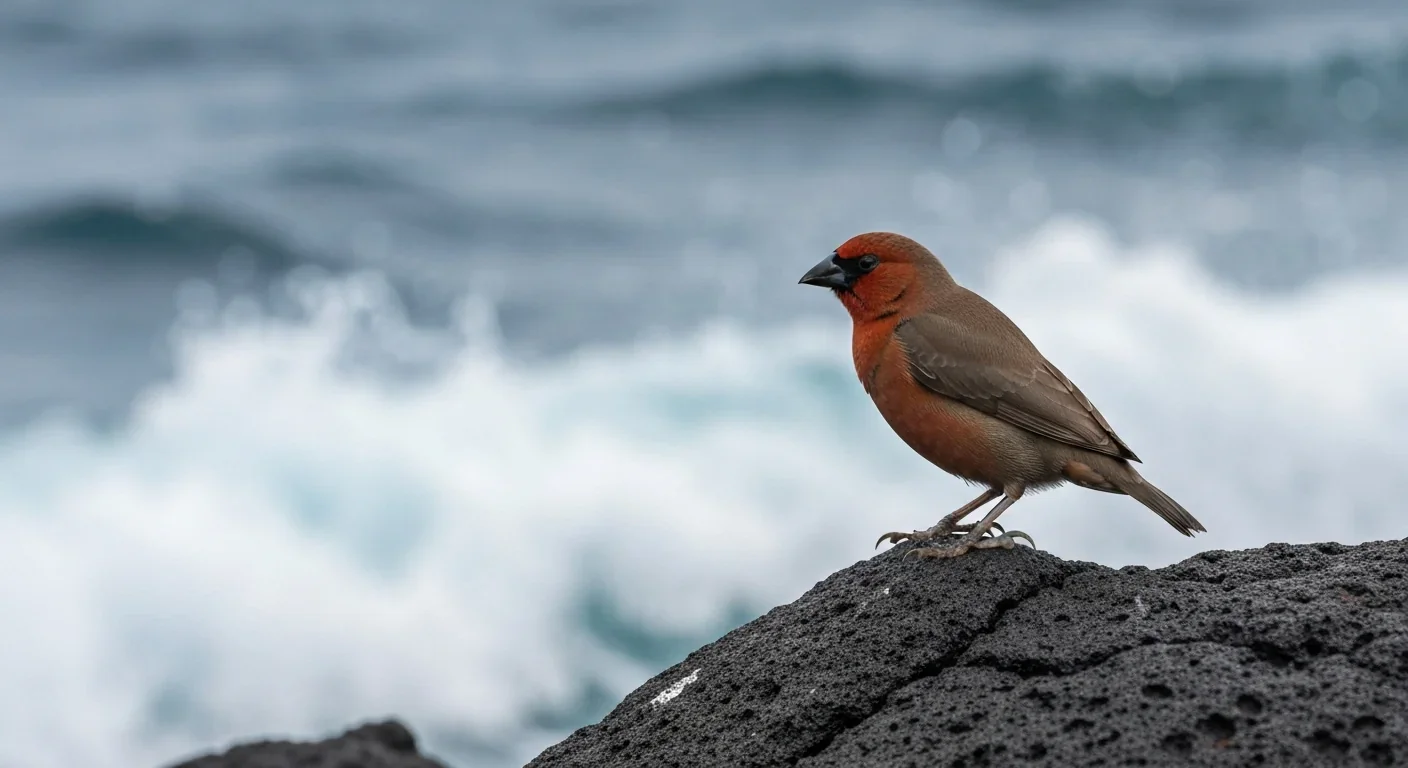
On two remote specks in the Galápagos archipelago, something extraordinary happened. A small brown bird, faced with brutal scarcity, did what no other songbird on Earth has done: it became a vampire. The vampire finch of Wolf and Darwin islands doesn't just peck seeds or hunt insects. It lands on the backs of seabirds twice its size, pierces their skin with a razor-sharp beak, and drinks their blood. This isn't horror fiction. It's one of the most remarkable examples of behavioral innovation in the natural world, a testament to how extreme environments can drive life to extraordinary extremes.
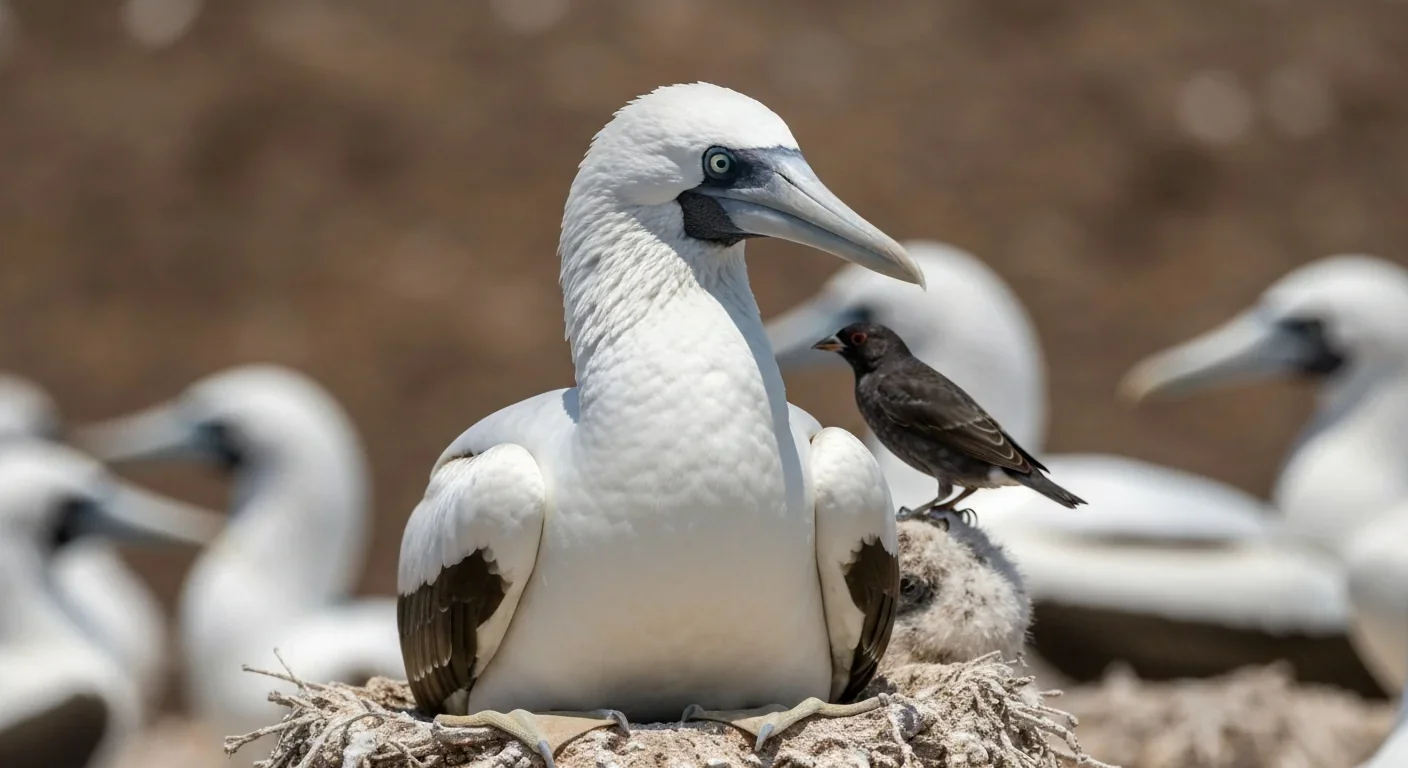
What makes this behavior even more surprising is that the boobies - Nazca and blue-footed - barely resist. They sit there, tolerating these tiny bloodsuckers as if the relationship were perfectly normal. Scientists have puzzled over this for decades. Why would a bird allow another to wound it and drink its blood? The answer reveals a complex evolutionary dance between parasite and host, scarcity and adaptation, innovation and survival.
The vampire finch (Geospiza septentrionalis) looks unremarkable at first glance. Small, dark-plumed, with a pointed beak, it could easily be mistaken for any of the other Darwin's finches scattered across the Galápagos. But appearances deceive. This bird has the sharpest, most pointed beak of any member of the Geospiza genus, a morphological shift that reflects a radical dietary pivot. While its cousins crack seeds or probe flowers for nectar, the vampire finch has evolved a feeding strategy that would make Dracula proud.
Until recently, the vampire finch was considered a subspecies of the sharp-beaked ground finch (Geospiza difficilis). But genetic evidence has convinced the International Ornithologists' Union to split it into its own species. The genetic divergence is substantial, indicating that these birds have been on a separate evolutionary path for some time. Their songs differ. Their beaks differ. And most strikingly, their diets differ.
Blood-feeding in birds is vanishingly rare. The vampire finch is unique in regularly feeding on the blood of healthy birds - a behavior so bizarre that when researchers first documented it in the 1960s and 1970s, it seemed almost too strange to be true.
Blood-feeding in birds is vanishingly rare. Vampire bats get all the press, but avian hematophagy is almost unheard of. The oxpecker of Africa sometimes drinks blood from the wounds of large mammals, but it primarily feeds on ticks and parasites. The vampire finch is unique in regularly feeding on the blood of healthy birds. It's a behavior so bizarre that when researchers first documented it in the 1960s and 1970s, it seemed almost too strange to be true.
So how does a small finch extract blood from a bird that could easily swat it away? The answer lies in precision and persistence. The vampire finch targets specific areas on its host - typically the back, near the base of the wings, or underneath the wings where the skin is thin and blood vessels are close to the surface. It pecks repeatedly with its sharp beak, breaking the skin until blood flows. Then it drinks, ingesting what it can before the wound clots or the booby shifts position.
Critically, the finch doesn't hunt in the traditional sense. It doesn't stalk, ambush, or kill. It simply exploits an available resource in the least harmful way possible. The wounds are superficial, rarely causing significant injury. The boobies show minimal defensive behavior, sometimes preening or shifting slightly but rarely flying away or attacking the finch. This tolerance is key to understanding why the behavior persists.
"The behavior has been theorized to have evolved from the finch's original use of pecking to clean parasites from the booby's plumage."
- Research documented in field studies
One hypothesis suggests that the relationship may have originated as a mutualistic cleaning service. Boobies are plagued by parasites - ticks, lice, and other ectoparasites that burrow into their plumage. Finches that pecked at these parasites would have been welcomed, or at least tolerated, by their hosts. Over time, some finches may have discovered that pecking harder, breaking the skin, provided access to a rich protein source. If the parasites were still being removed in the process, the boobies may have continued to tolerate the behavior. The finch gets a meal; the booby gets groomed. It's a trade-off, albeit a bloody one.
Wolf and Darwin islands are among the most remote and inhospitable places in the Galápagos. Tiny, arid, and largely barren, they offer limited food resources. Freshwater is scarce, plant life is sparse, and during the dry season, seeds and insects become nearly impossible to find. These are not lush, forgiving habitats. They are evolutionary pressure cookers, where only the most adaptable survive.
For a finch, the dry season is a crisis. Seeds dry up or are consumed by competitors. Insects vanish. Nectar-producing flowers wilt. Starvation becomes a real threat. In this context, blood-feeding isn't an aberration - it's a lifeline. Blood is rich in protein, lipids, and essential nutrients. A few sips can sustain a finch through lean times when other food sources fail.
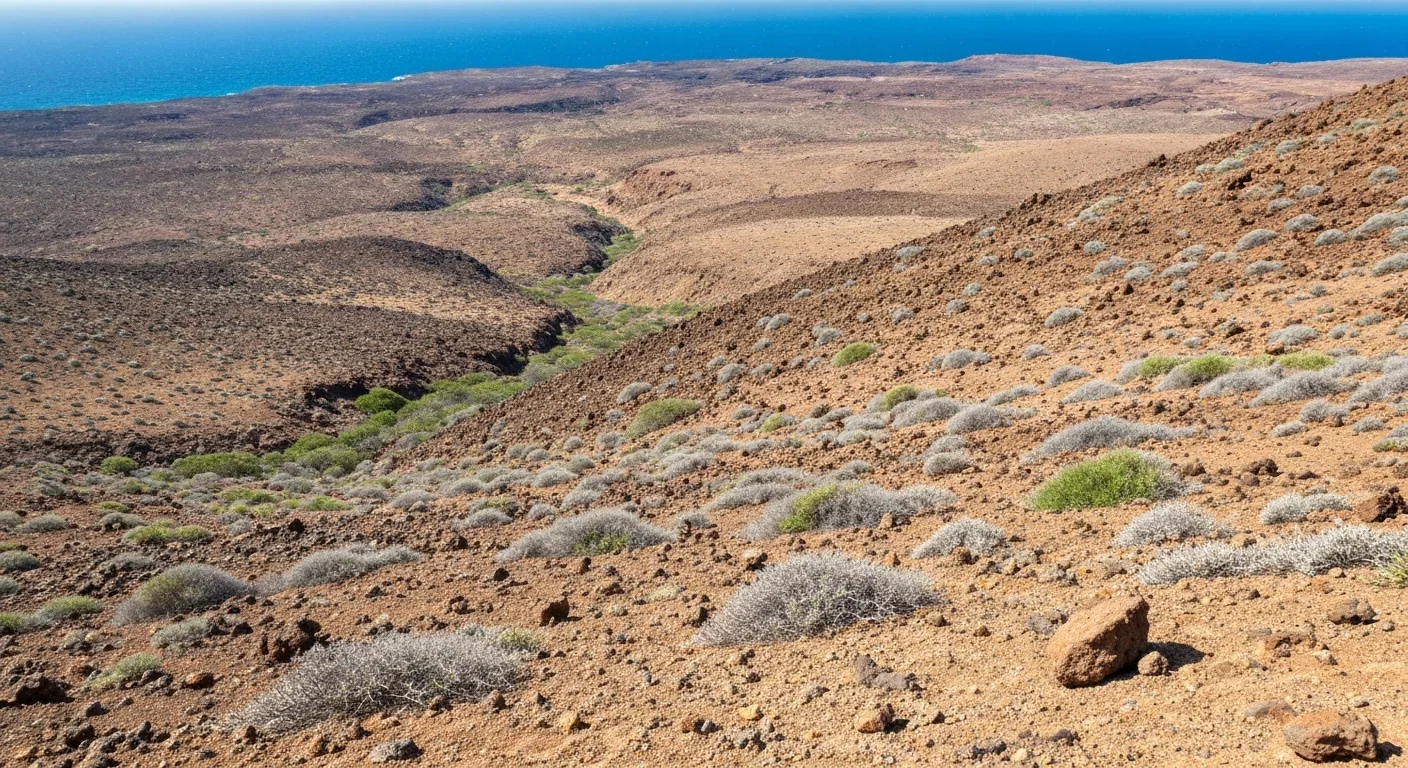
Importantly, blood-feeding isn't the vampire finch's primary diet. During wetter periods, when seeds and insects are abundant, the birds feed conventionally. They also consume nectar from prickly pear cactus flowers, at least on Wolf Island. Blood is a fallback, a seasonal supplement that allows the finches to survive when other resources are exhausted. This dietary flexibility - technically called phenotypic plasticity - is the hallmark of a successful island colonist.
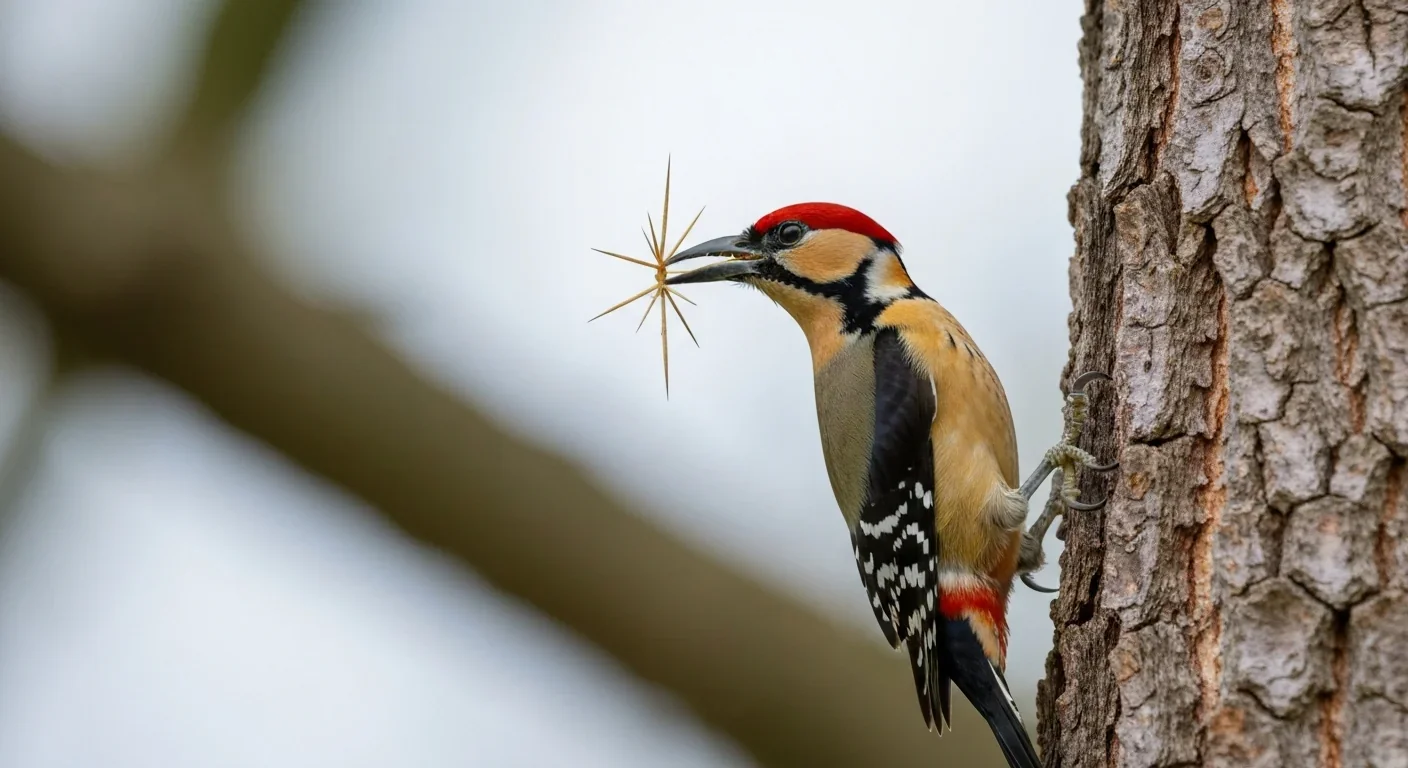
A persistent myth surrounds the vampire finch: that it uses cactus spines as tools to access blood or parasites, similar to the woodpecker finch, which famously wields twigs and spines to extract grubs from tree crevices. This claim appears in popular articles and even some educational materials, but it's almost certainly a conflation.
The woodpecker finch (Camarhynchus pallidus) is well-documented using tools. It selects cactus spines or twigs, sometimes modifying them by shortening to improve manageability, and then uses them to probe deep cracks in bark to extract insect larvae. This behavior is innate in some individuals and socially learned in others. It's a textbook example of avian tool use, studied extensively by researchers.
There's no credible evidence that vampire finches use tools. The scientific literature on vampire finches makes no mention of cactus spine use. They don't need tools - their beaks are already perfectly adapted for the job.
But there's no credible evidence that vampire finches use tools. The scientific literature on vampire finches makes no mention of cactus spine use. They don't need tools - their beaks are already perfectly adapted for the job. The myth likely arose from a misunderstanding, blending two distinct Darwin's finch species into a single, sensationalized narrative. The vampire finch drinks blood. The woodpecker finch uses tools. They're separate behaviors, separate species, separate islands. Lumping them together makes for a better story, but it's not accurate.
Recent research has revealed just how specialized vampire finches have become. A 2018 study published in Microbiome analyzed the gut bacteria of vampire finches and compared them to other Darwin's finches. The results were striking: vampire finches have intestinal microbial communities rich in Peptostreptococcaceae, a bacterial family also found in vampire bats. This suggests convergent evolution at the microbial level - two unrelated blood-feeding animals have independently evolved similar gut microbiomes to help them digest blood.
Blood is not an easy food to process. It's rich in iron, which can be toxic in high concentrations. It lacks certain nutrients and requires specialized enzymes to break down. The presence of Peptostreptococcaceae suggests that vampire finches have adapted not just behaviorally, but physiologically, to their macabre diet. Their guts have been colonized by bacteria that aid in blood digestion, a change that may have been essential for the behavior to evolve in the first place.
Genetically, vampire finches are part of the larger story of Darwin's finch adaptive radiation. A landmark 2015 study published in Nature sequenced the genomes of 120 finches, including all known species. The researchers identified the ALX1 gene as a key driver of beak shape variation. Small genetic changes in ALX1 can produce large morphological shifts, allowing finches to exploit new ecological niches. The vampire finch's sharp, pointed beak is likely the result of such genetic changes, fine-tuned by natural selection over many generations.
"The most exciting and significant finding was that genetic variation in the ALX1 gene is associated with variation in beak shape not only between species of Darwin's finches but also among individuals."
- Dr. Leif Andersson, lead author, Nature 2015
The study also revealed substantial gene flow between species. Hybridization has been more common than previously thought, suggesting that Darwin's finches aren't rigidly isolated lineages. They're a dynamic, interbreeding network, constantly shuffling genetic variation. This genetic fluidity may have accelerated adaptation, allowing innovations like blood-feeding to spread more quickly through populations.
The vampire finch is part of one of the most famous examples of adaptive radiation in biology. Darwin's finches comprise 13 to 18 species that evolved from a common ancestor roughly 1 to 2 million years ago. From that single founding population, finches diversified to exploit nearly every available food source in the Galápagos: seeds, insects, flowers, cactus, and now blood.
This radiation was driven by ecological opportunity. The Galápagos were largely empty when the ancestral finches arrived. There were few competitors, few predators, and a wide range of unexploited niches. Over time, natural selection favored individuals with beaks and behaviors suited to specific food sources. Some evolved thick, powerful beaks for cracking hard seeds. Others developed slender, probing beaks for extracting insects. The vampire finch went in a different direction entirely.
Behavioral innovation is a crucial part of this story. Evolution isn't just about anatomy - it's about what animals do. The vampire finch's behavior is as much an adaptation as its beak. The ability to recognize boobies as a food source, to target vulnerable areas, to persist despite initial resistance - these are cognitive and behavioral traits that had to evolve alongside the physical tools to exploit them.
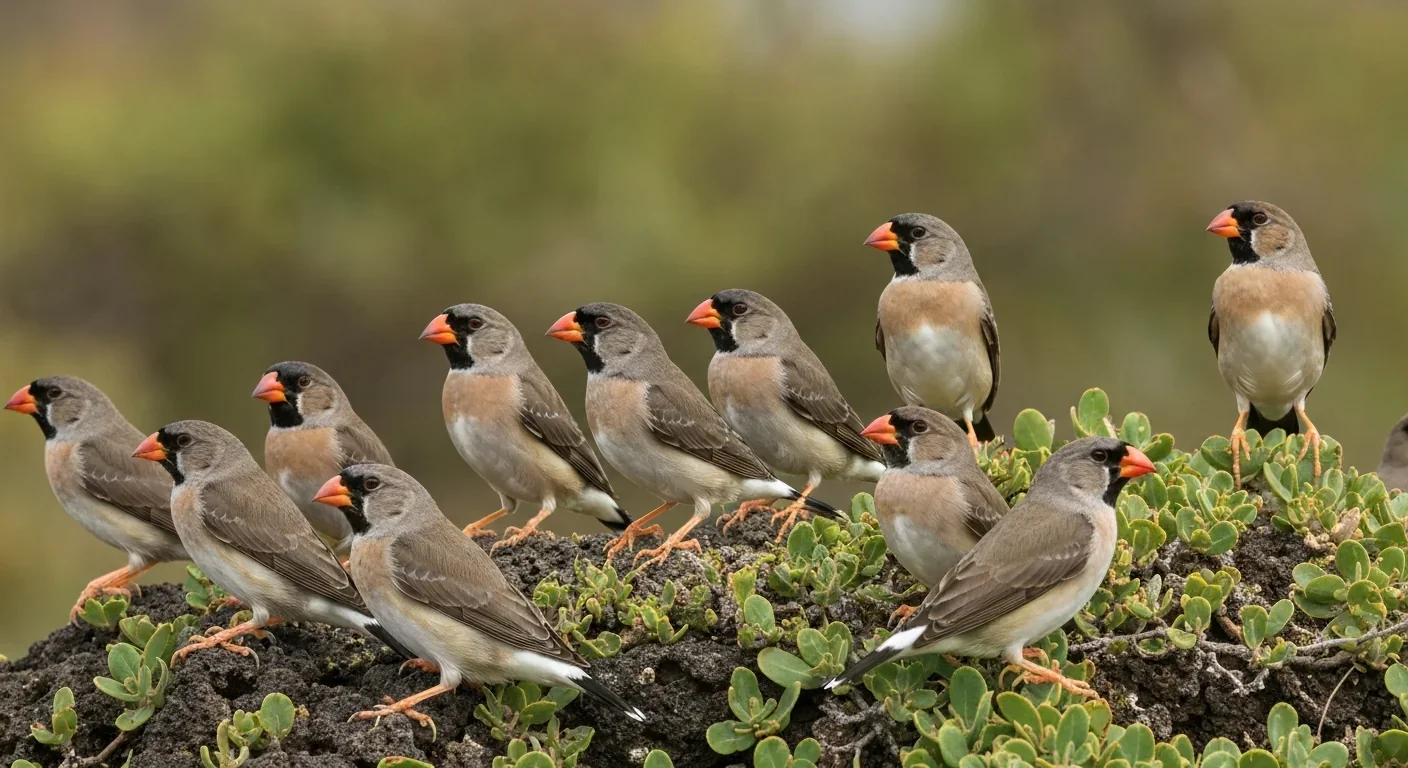
And the boobies had to evolve tolerance. If early boobies had been highly aggressive toward finches, the behavior might never have taken hold. But for whatever reason - perhaps because of the parasite-cleaning hypothesis, or simply because the energetic cost of constant vigilance outweighed the minor blood loss - boobies allowed it to happen. Over generations, finches became bolder, boobies became more tolerant, and a bizarre symbiosis emerged.
Vampire finches are currently listed as vulnerable, with an estimated population of 250 to 999 mature individuals. These numbers are alarmingly low, reflecting the precarious existence of species confined to tiny, remote islands. Wolf and Darwin islands are among the least-visited places in the Galápagos, which offers some protection from human disturbance. But isolation is a double-edged sword. If a disease sweeps through, or if climate change alters the islands' fragile ecosystems, there's nowhere for the finches to go.
The Galápagos are a UNESCO World Heritage Site, with strict protections in place. Tourism is carefully managed, and researchers must obtain permits to visit the most sensitive areas. These measures have helped preserve the archipelago's unique biodiversity. But climate change poses new threats. Rising sea levels, shifting weather patterns, and warming ocean temperatures could disrupt the delicate balance that allows vampire finches to survive. If dry seasons become longer or more severe, even blood-feeding may not be enough to sustain them.
Invasive species are another concern. Rats, cats, and other introduced predators have devastated bird populations on many islands. So far, Wolf and Darwin have remained relatively pristine, but the risk is ever-present. A single shipwreck or careless visitor could introduce species that would spell doom for the vampire finch.
Conservation efforts in the Galápagos have been largely successful, but they require constant vigilance. Monitoring populations, controlling invasives, and limiting human access are all essential. The vampire finch is a reminder that evolution doesn't stop, that nature is constantly experimenting, and that the strangest innovations often arise in the most extreme environments.
The vampire finch is often compared to vampire bats, but the two are only superficially similar. Vampire bats (Desmodus rotundus and related species) are obligate blood-feeders, meaning they feed exclusively on blood. They have evolved specialized adaptations: anticoagulant saliva, heat-sensing facial pits, and razor-sharp teeth. They feed primarily on large mammals, making small incisions and lapping up blood as it flows.
Vampire finches, by contrast, are facultative blood-feeders. They eat blood when they need to, but it's not their sole food source. They lack the anticoagulant saliva of vampire bats, which is why booby wounds clot quickly. They don't have heat sensors or specialized teeth. They're generalists that have added a macabre trick to their repertoire.
The convergence in gut microbiomes is fascinating but limited. Both vampire finches and vampire bats need to digest blood, so they've independently evolved similar bacterial communities. But the similarity ends there. The evolutionary pathways, the ecological contexts, and the anatomical adaptations are entirely different.
Oxpeckers (Buphagus species) are perhaps a closer analogy. These African birds feed on ticks and parasites that infest large mammals like buffalo and rhinos. They also drink blood from open wounds, sometimes even keeping wounds open to ensure a steady supply. The relationship is controversial - some researchers argue it's mutualistic, with oxpeckers providing parasite control; others see them as parasites themselves. The vampire finch's relationship with boobies may follow a similar pattern: a mutualism that has tipped, over evolutionary time, into exploitation.
The vampire finch is a case study in how evolution responds to adversity. Faced with starvation, a small population of finches on two remote islands did something unprecedented. They didn't wait for a genetic mutation to save them. They experimented, behaviorally. They tried new food sources. Some failed. Some succeeded. And those that succeeded - those that figured out how to extract blood from seabirds without getting killed - survived to pass on their genes.
This is evolution in action, not as a slow, grinding process, but as a dynamic interplay between behavior and environment. Behavioral flexibility creates opportunities. Natural selection refines those behaviors, favoring individuals with the anatomy and physiology to exploit them more efficiently. Over many generations, a weird trick becomes a species' defining trait.
The vampire finch also challenges our assumptions about what birds are capable of. We think of songbirds as cheerful, harmless creatures. We don't expect them to drink blood. But nature doesn't care about our expectations. Evolution is a tinkerer, not a designer. It works with whatever materials are at hand, repurposing old structures for new functions. A seed-cracking beak becomes a blood-drawing tool. A parasite-cleaning behavior becomes a feeding strategy. Innovation doesn't require planning - it just requires survival pressure and time.
What does the future hold for these remarkable birds? In the short term, they seem relatively secure. Their populations are stable, their habitat is protected, and their bizarre feeding strategy continues to work. But in the long term, the challenges are mounting. Climate change, invasive species, and the inherent fragility of small island populations all pose risks.
There's also the question of what happens if their food sources change. Nazca and blue-footed boobies are long-lived seabirds, but their populations fluctuate with ocean conditions. El Niño events, which warm the Pacific and disrupt marine food webs, can cause booby populations to crash. If boobies decline, vampire finches lose their most reliable fallback food source. They might adapt again, finding new hosts or new strategies. Or they might not.
One hope is that the Galápagos, as a living laboratory of evolution, will continue to be studied and protected. The vampire finch is part of a larger story - a story of how life diversifies, adapts, and persists in the face of overwhelming odds. Every discovery about these birds adds another piece to the puzzle of how evolution works. And every effort to conserve them is an investment in the future of science, in our understanding of life's endless creativity.
The vampire finch won't win any popularity contests. It's not cuddly. It's not colorful. It doesn't sing sweetly. But it represents something profoundly important: the boundless ingenuity of nature, the power of adaptation, and the surprising ways that life finds a foothold even in the harshest environments. On two tiny islands in the middle of the Pacific, a small brown bird discovered that survival sometimes requires drinking the blood of your neighbors. And in doing so, it became one of the most extraordinary examples of evolutionary innovation on Earth.

Project Orion was a real 1960s program to reach other stars by detonating 800 nuclear bombs behind a spacecraft. The physics worked and the engineering was feasible, but the 1963 nuclear test ban treaty killed it. It remains the most credible interstellar spacecraft ever designed.
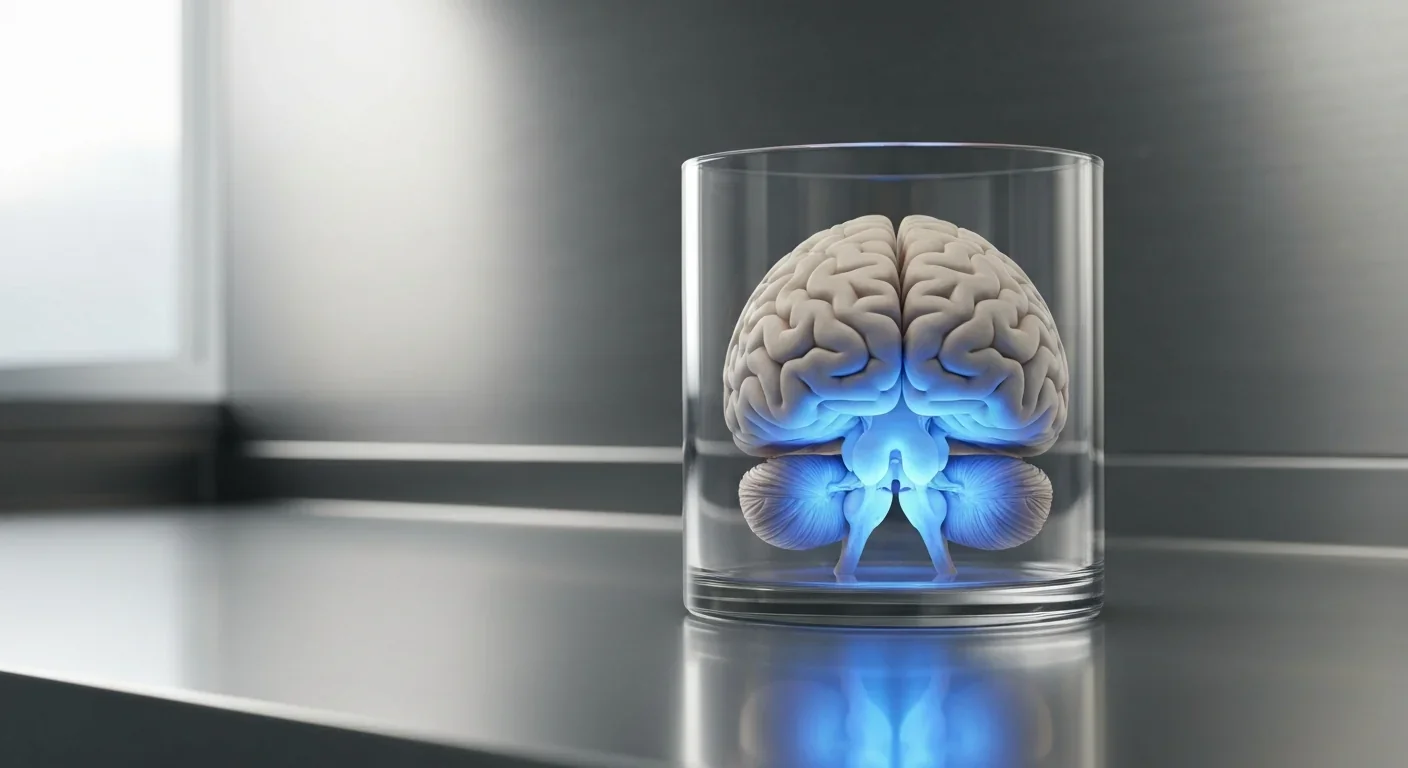
The locus coeruleus, a tiny brainstem structure, degenerates decades before Alzheimer's symptoms appear. Its loss cripples the brain's inflammation control, waste clearance, and sleep regulation. New imaging tools and noradrenergic therapies offer hope for early detection and prevention.

Research shows the sharing economy often increases total resource consumption through the Jevons paradox and rebound effects. Ride-sharing adds billions of vehicle miles, co-working spaces use more energy per worker, and diffused responsibility erodes conservation behavior. Breaking the paradox requires congestion pricing, accountability design, and matching sharing models to appropriate resource types.

Psychological reactance theory explains why banning or restricting things makes people want them more. From Prohibition to the Streisand effect to scarcity marketing, research shows that threatening people's freedom reliably backfires, and autonomy-supportive communication is far more effective.
A carnivorous pitcher plant in Borneo evolved to house bats instead of trapping insects, gaining up to 95% of its nitrogen from bat guano. The plant even built an ultrasonic reflector to help bats find it, revealing that carnivory in plants is a flexible spectrum.

The quantified self movement began as a hacker-ethos pursuit of personal insight, but corporate wearables now funnel biometric data to employers, insurers, and data brokers. With 81% of Americans wrongly believing health apps are HIPAA-protected, a regulatory void enables health data to be sold for pennies while generating anxiety instead of empowerment.

CXL memory pooling lets servers dynamically share DRAM over a cache-coherent interconnect, eliminating the 40% stranded memory waste in data centers. With commercial hardware now shipping and Azure deploying CXL cloud instances, this technology promises to cut memory costs by 50% while enabling composable infrastructure.

Loading featured articles...