Carnivorous Plant Farms Bat Poop Instead of Eating
TL;DR: Vampire bats survive starvation by sharing regurgitated blood with hungry roostmates. Research shows these cooperative networks are built on grooming-based trust and reciprocity, not kinship, with past help being 8.5 times more predictive than genetic relatedness.
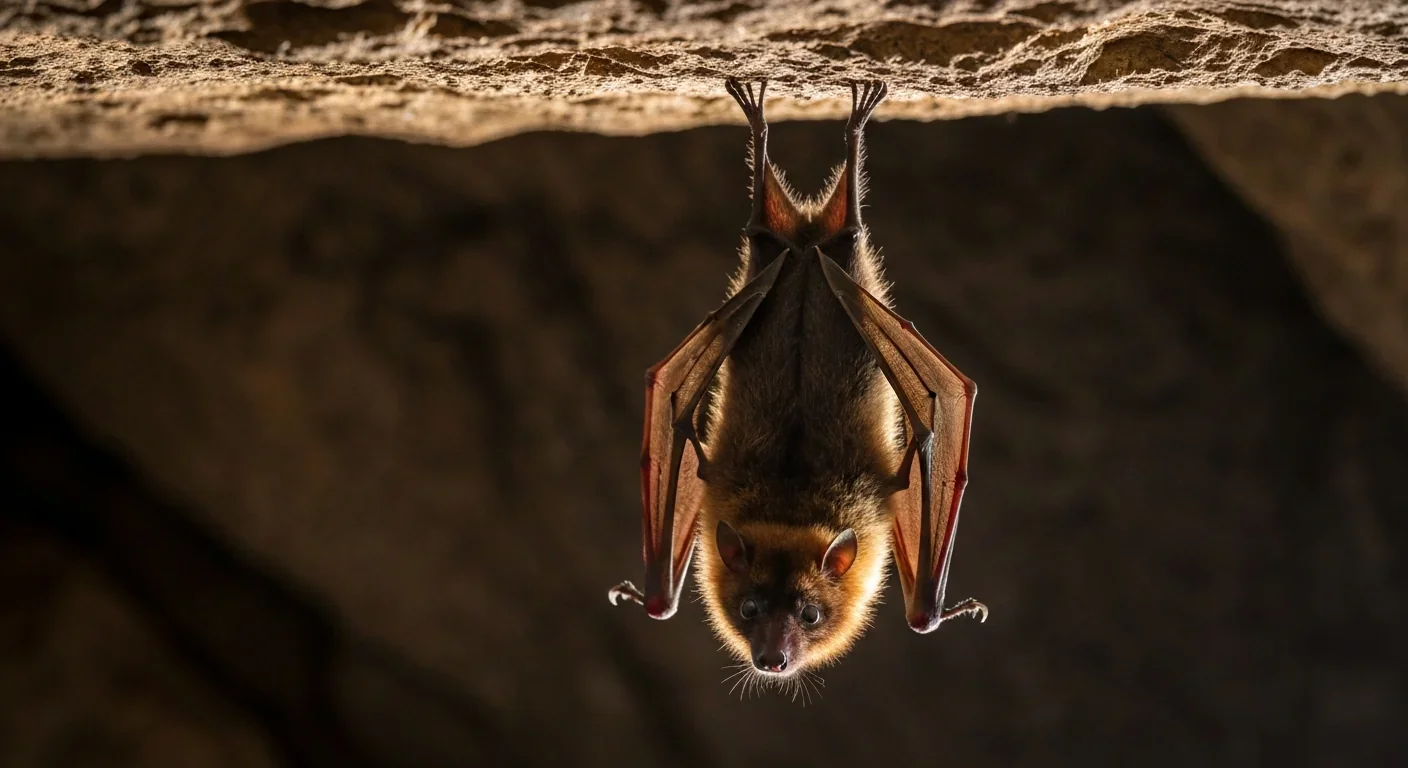
Every night across the tropical Americas, millions of common vampire bats face a gamble that would terrify any insurance actuary. They leave their roosts in caves, hollow trees, and abandoned buildings to hunt for blood, and roughly 7 to 10 percent of adults come home empty. That sounds manageable until you learn the stakes: a vampire bat that fails to feed will die after about 70 hours of fasting. Two bad nights in a row and the clock is already ticking.
So these bats did something that biologists are still working to fully explain. They built a cooperative system based on trust, grooming, and shared blood that functions like a biological insurance network.
The common vampire bat, Desmodus rotundus, survives on one of the most restrictive diets in the mammal world. It feeds exclusively on blood and must consume between 50 and 100 percent of its body weight each night just to keep its metabolism running. Blood is surprisingly poor nutrition, mostly water and low in calories, so the bat's body burns through its reserves fast.
A bat that misses a single night of feeding can lose roughly 25 percent of its body weight by the following evening. Miss two consecutive nights, and the risk of starvation becomes serious.
This metabolic pressure is the engine behind one of the most remarkable cooperative behaviors in the animal kingdom. When a hungry bat returns to the roost, a well-fed roostmate may regurgitate a portion of its recent blood meal directly into the starving bat's mouth.
The act involves a well-fed bat transferring a portion of its recent meal to keep the other alive through the night. A fasting bat typically receives blood from about three different donors in a single night, spreading the cost of generosity across the group. And the economics are surprisingly favorable for donors: the energetic cost of donating is relatively low compared to the survival benefit the recipient gains.
A vampire bat can die after just 70 hours without feeding, making blood sharing not a generous bonus but an absolute survival necessity for the colony.
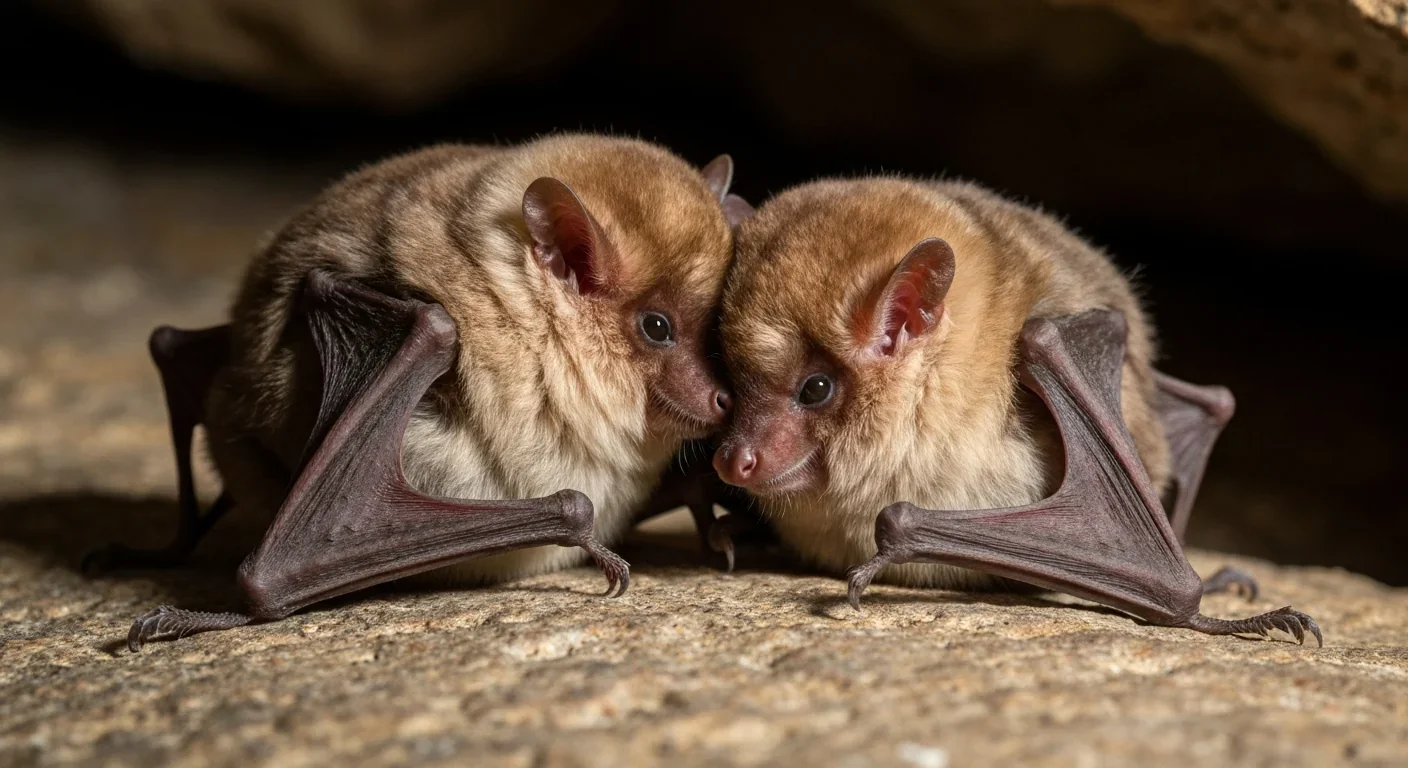
In 1984, a biologist named Gerald Wilkinson published what would become a landmark study in Nature, documenting blood regurgitation between roosting vampire bats in the wild. Working at field sites in northwest Costa Rica, Wilkinson spent hundreds of hours observing bat colonies, banding individuals with fluorescent plastic rings so he could track them over time. What he found upended assumptions about animal generosity.
Wilkinson observed that bats that donated food were more likely to receive help when they themselves failed to feed. The pattern suggested reciprocity rather than random generosity. He also noticed that genetic relatives were somewhat more likely to share, but the average genetic relatedness within a roost was low enough that kinship alone couldn't account for the behavior. Something else was at work.
This was significant because, at the time, most explanations for animal cooperation leaned heavily on kin selection, the idea championed by W.D. Hamilton that animals help relatives because they share genes. Wilkinson's bats were doing something different. They were sharing with non-relatives, and they were keeping track of who helped them.
What made Wilkinson's study so powerful was its simplicity. He demonstrated that food sharing was only observed when the co-roosting association was greater than 60%, meaning bats had to spend substantial time together before the sharing began. This wasn't random charity. It was conditional cooperation, built on familiarity and repeated interaction.

If blood sharing is the big investment, then grooming is the initial deposit. Researchers have consistently found that social grooming precedes food sharing in vampire bat colonies, often by weeks or months. Two bats will spend time cleaning each other's fur, a behavior called allogrooming, before any blood changes mouths.
Think of it as a trust-building exercise. Grooming is relatively low-cost compared to giving up a blood meal, so it lets bats test potential partners without risking much. Over time, grooming bouts increase in frequency and duration, and eventually one bat takes the bigger step of regurgitating blood for the other.
Researchers describe this as a "raising the stakes" model, where bats slowly increase their investment in a relationship before committing to the costly act of food sharing. This pattern looks remarkably similar to how human friendships develop. You don't lend your car to someone you met yesterday. You start with small favors, build trust, and gradually increase the stakes.
"These complex social relationships maintained by low-cost social investments are on par with what you would see in primates."
- The Conversation, on vampire bat social bonds
The grooming also serves a hygienic purpose, removing parasites and pathogens, so it's not purely a social signal. But the timing and partner selectivity make it clear that social bonding is a major function.
The sharing network inside a vampire bat colony isn't a free-for-all. It's a structured web of relationships where some connections are strong and others barely exist. Among familiar bats, the amount of food given from bat A to bat B is best predicted by the amount of food given from bat B to A. This is classic tit-for-tat reciprocity, and the data backs it up powerfully.
Studies of captive colonies found that past reciprocity was 8.5 times more important than genetic relatedness in predicting who fed whom. That's a staggering ratio. It means a bat is far more likely to share blood with an unrelated roostmate who helped it last week than with a genetic cousin who never did.
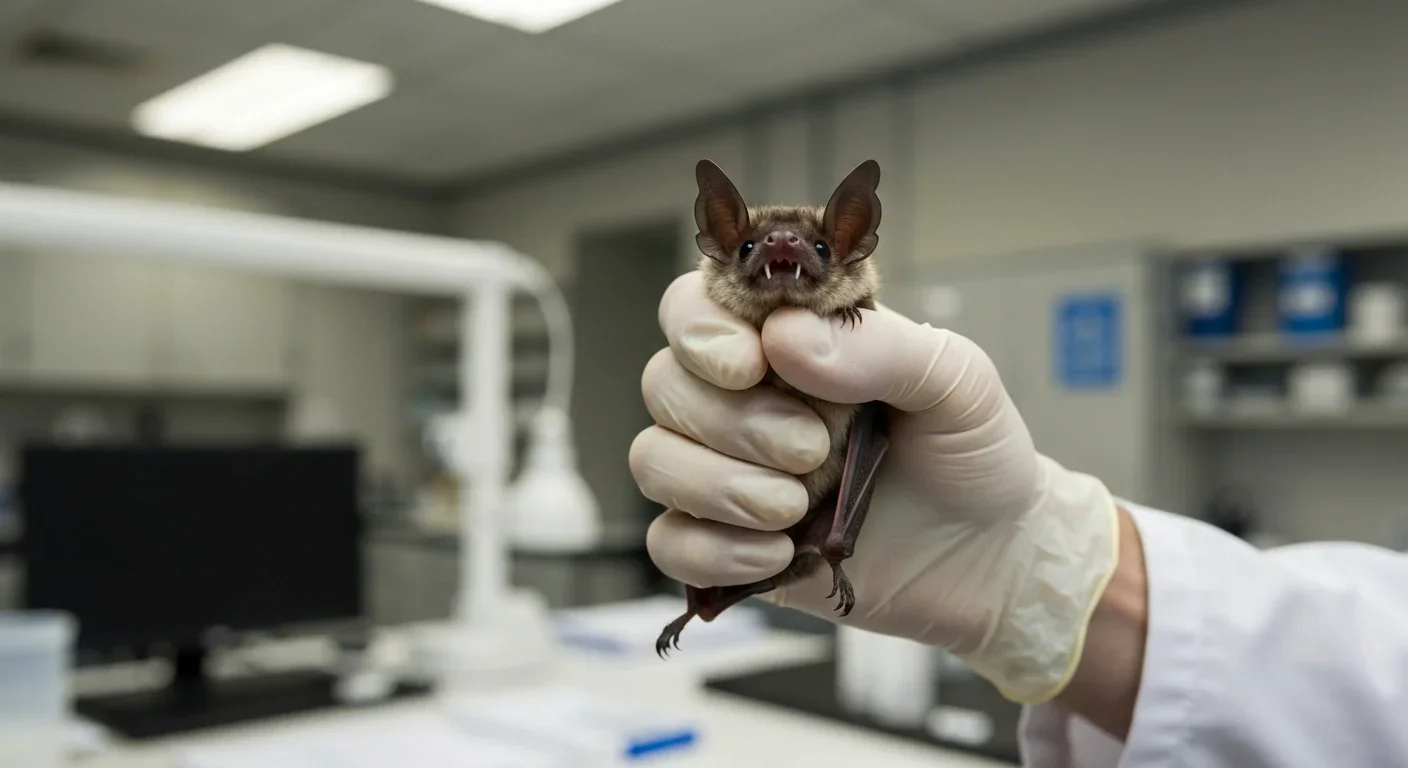
The bats track their social partners and reduce grooming and food donations to individuals who don't reciprocate, resembling a tit-for-tat strategy.
Female bats tend to be the backbone of these networks. Because female vampire bats remain in natal colonies while males disperse more frequently, females have more time to build stable, long-term cooperative bonds. Vampire bats are among the most social of bat species, and their colonies are built around these long-term relationships, especially among females.
Gerald Carter, a behavioral ecologist at Ohio State University, has spent over a decade refining our understanding of these networks. His experiments at the Smithsonian Tropical Research Institute involved deliberately fasting individual bats and observing which colony members stepped in to help. Carter found that bats that were more generous with non-relatives built larger social networks and received more help during periods of need. Generosity, it turns out, is a solid investment strategy.
Past reciprocity was 8.5 times more important than genetic relatedness in predicting which bats shared blood, proving that friendship trumps family in vampire bat colonies.
Carter's work has pushed the field beyond strict reciprocal altruism. The older model assumed bats were essentially keeping a ledger: I gave to you, so you owe me. But the reality looks more nuanced. Carter has argued that vampire bat cooperation is better understood through a relationship investment framework, where bats invest in social bonds the way a venture capitalist invests in startups.
One of Carter's most striking experiments involved removing a bat's closest sharing partner and seeing what happened. Bats whose best friends had provided meals even years earlier received more overall assistance from roostmates when they themselves were starving. The network was resilient. Losing one key partner didn't mean starvation because the bat had invested in multiple relationships.
In a 2020 study published in Current Biology, Carter and his team took captive-born bats that had formed social bonds in the lab and released them into the wild. The results were remarkable: captive-formed relationships persisted in the wild. Bats that had shared blood and groomed each other in the laboratory continued to associate closely after release, roosting near one another and showing higher rates of food sharing than unrelated pairs without prior interaction. These weren't just lab artifacts. These were real friendships.
Here's where things get really interesting. Carter's team analyzed nearly 700,000 bat vocalizations from 95 individuals recorded between 2011 and 2019. They discovered that unrelated bats that shared food developed more similar vocalizations over time. Close friends literally started to sound alike, something also seen in dolphins and elephants.
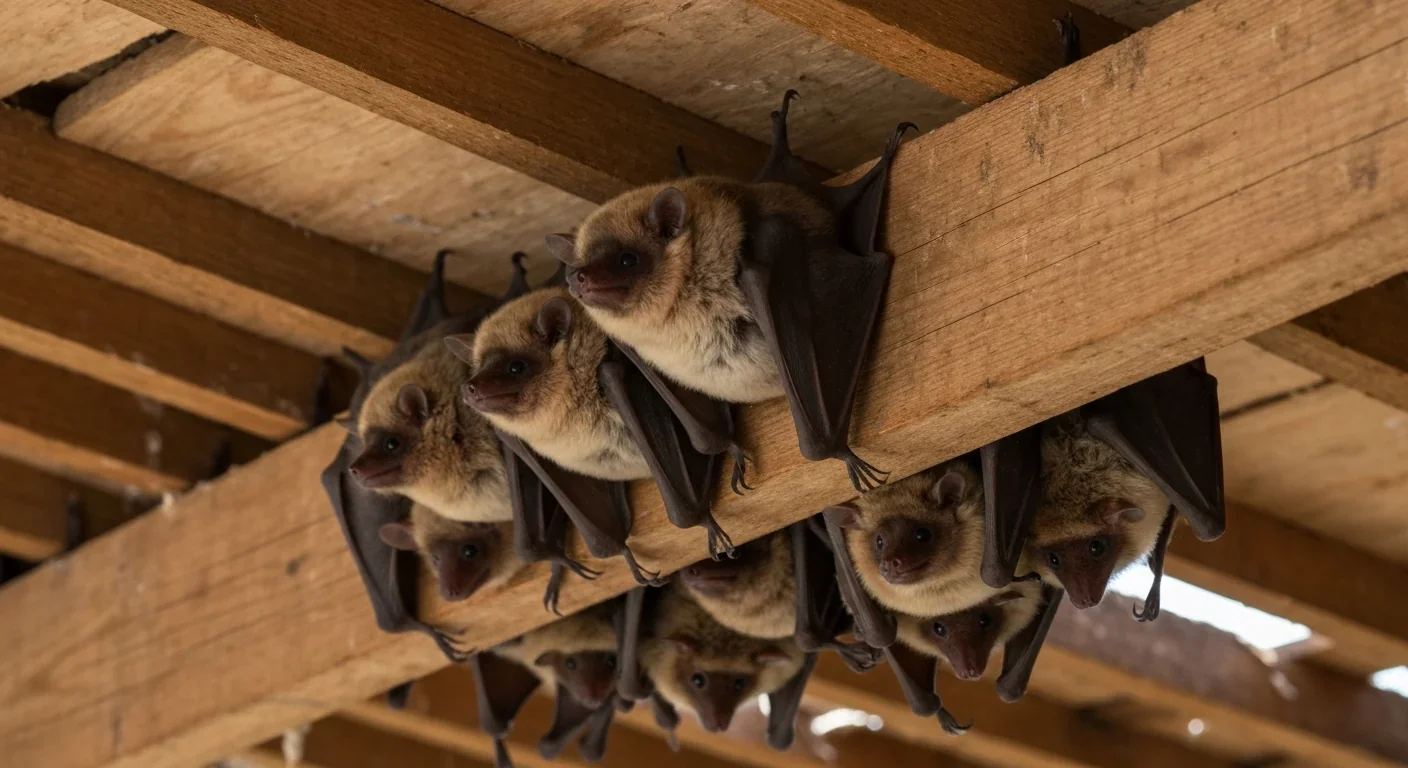
This vocal convergence suggests that the social bonds formed through grooming and blood sharing run deeper than simple economic exchange. The bats aren't just tracking favors. They're building genuine relationships that reshape their behavior, their communication patterns, and possibly their perception of who belongs to their social circle.
Vampire bats can remember who helped them in the past and return the favor, a cognitive trait once thought to be exclusive to primates and a few bird species.
"The ability to form alliances beyond immediate kin can expand access to resources and buffer against unpredictable environments."
- Gerald Carter, Ohio State University
The vampire bat story matters beyond biology because it challenges comfortable assumptions about why animals, and by extension humans, cooperate. For decades, the dominant explanation was kin selection: help your relatives because they carry your genes. Vampire bats show that cooperation between non-relatives is not only possible but can be the dominant pattern. Past reciprocity, not genetics, is the strongest predictor of who helps whom.
Research on Norway rats has shown similar patterns of generalized reciprocity, where animals that received help were more likely to assist unfamiliar partners. This suggests that the cooperative strategies vampire bats use aren't unique to one species but may represent a broader evolutionary toolkit for social mammals.
The vampire bat system also offers a practical lesson about how trust scales. Bats don't trust everyone equally. They start small with grooming, escalate to blood sharing only after repeated positive interactions, and cut off partners who don't reciprocate. It's a system that balances generosity with accountability, and it works because the stakes are literally life and death.
As researchers continue to study these animals using proximity sensors and long-term behavioral tracking, the picture keeps getting richer. Bats meeting up outside the roost for short bouts lasting up to thirty minutes during nighttime foraging. Networks reorganizing when key members leave. Friendships that persist across years and even across captivity and wild release.
Vampire bats didn't read game theory textbooks or attend workshops on building social capital. But through millions of years of evolution, they solved a problem that human institutions still struggle with: how to build a reliable safety net based on trust, reciprocity, and incremental investment. The answer, it turns out, starts with a good grooming session and the willingness to share a meal when your neighbor is starving.

Project Orion was a real 1960s program to reach other stars by detonating 800 nuclear bombs behind a spacecraft. The physics worked and the engineering was feasible, but the 1963 nuclear test ban treaty killed it. It remains the most credible interstellar spacecraft ever designed.

The locus coeruleus, a tiny brainstem structure, degenerates decades before Alzheimer's symptoms appear. Its loss cripples the brain's inflammation control, waste clearance, and sleep regulation. New imaging tools and noradrenergic therapies offer hope for early detection and prevention.

Research shows the sharing economy often increases total resource consumption through the Jevons paradox and rebound effects. Ride-sharing adds billions of vehicle miles, co-working spaces use more energy per worker, and diffused responsibility erodes conservation behavior. Breaking the paradox requires congestion pricing, accountability design, and matching sharing models to appropriate resource types.

Psychological reactance theory explains why banning or restricting things makes people want them more. From Prohibition to the Streisand effect to scarcity marketing, research shows that threatening people's freedom reliably backfires, and autonomy-supportive communication is far more effective.
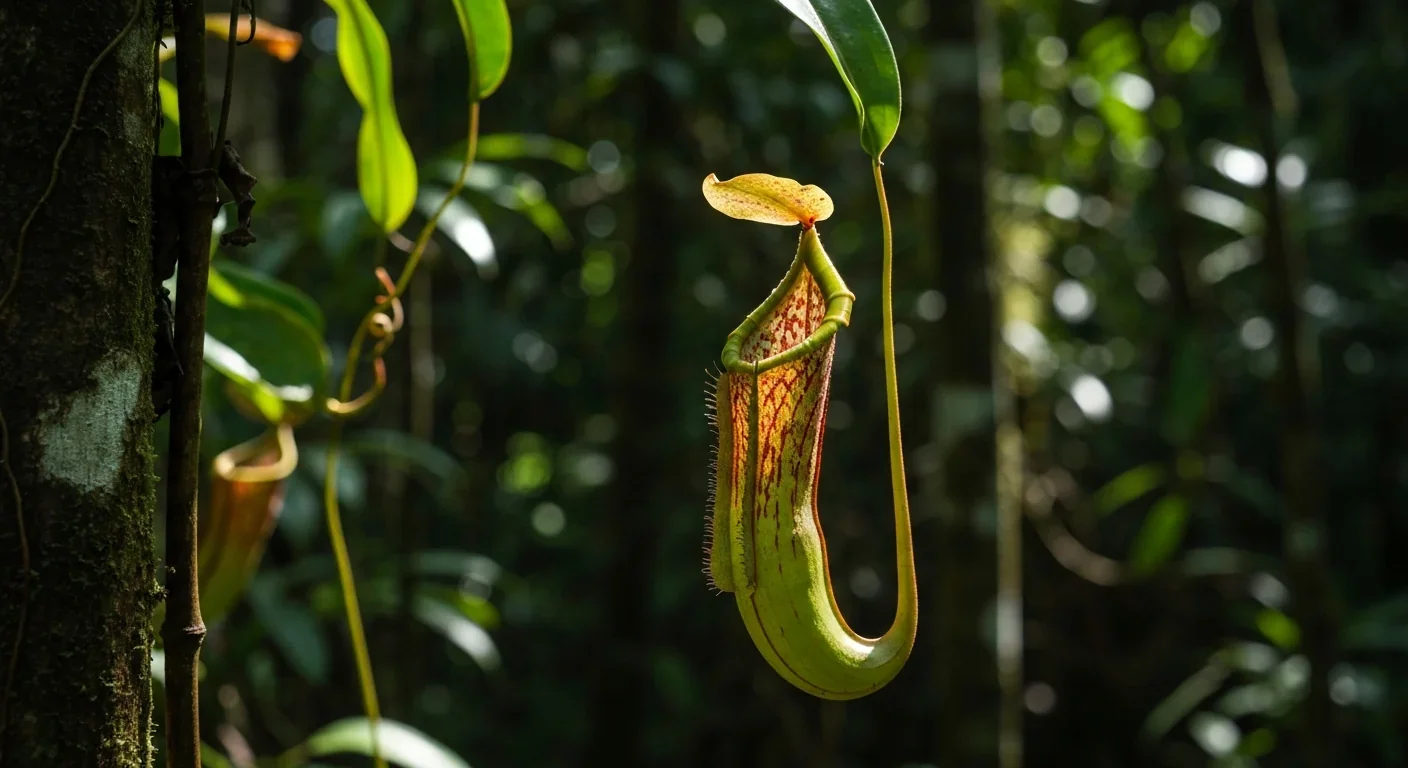
A carnivorous pitcher plant in Borneo evolved to house bats instead of trapping insects, gaining up to 95% of its nitrogen from bat guano. The plant even built an ultrasonic reflector to help bats find it, revealing that carnivory in plants is a flexible spectrum.

The quantified self movement began as a hacker-ethos pursuit of personal insight, but corporate wearables now funnel biometric data to employers, insurers, and data brokers. With 81% of Americans wrongly believing health apps are HIPAA-protected, a regulatory void enables health data to be sold for pennies while generating anxiety instead of empowerment.

CXL memory pooling lets servers dynamically share DRAM over a cache-coherent interconnect, eliminating the 40% stranded memory waste in data centers. With commercial hardware now shipping and Azure deploying CXL cloud instances, this technology promises to cut memory costs by 50% while enabling composable infrastructure.

Loading featured articles...